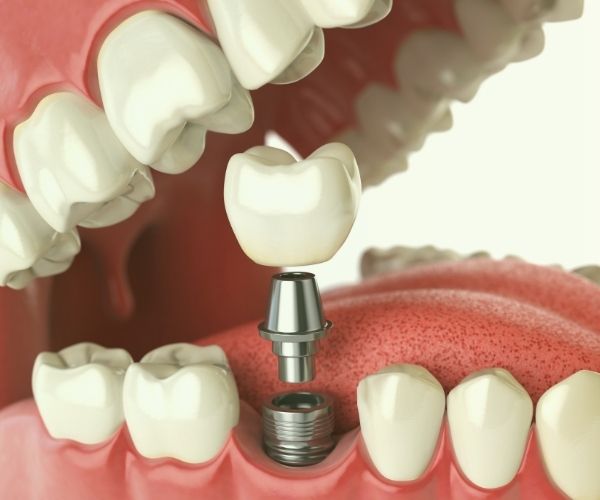
A dental implant is a permanent solution for replacing one or more missing teeth, improving both your smile and your overall quality of life. Dental implants consist of a titanium root attached to the jawbone, topped with a crown or bridge. Over time, they bond with the jawbone to ensure stability and closely resemble natural teeth in appearance and function. If you’re concerned about your replacement teeth looking natural or becoming loose, implants are a great choice.
Dental implants can help with various issues like missing, damaged, discoloured, or failing teeth, as well as problems with crowns, bone loss, and receding gums. They are vital for maintaining your overall dental health. Replacing missing teeth is extremely important because it prevents bone loss, which can make your face appear older and may loosen nearby teeth. At Westhill Dental Centre, part of the Dartford Dental and Implant Centre, our experienced team of dentists in Dartford is here to help you regain your smile.
Natural Appearance — Implants look and feel like a natural tooth, ensuring a seamless experience.
Stability & Comfort — Implants offer lasting stability and comfort, preserving the health of adjacent teeth.
Secure Fit — Implants remain securely in place and do not risk loosening or falling out.
Long-Lasting — With proper oral care, implants can endure for many years.
Bone Preservation — Implants prevent bone loss and maintain jaw structure, supporting neighbouring teeth.

Lucie Wenden 2024-04-19
2024-04-19
Angela Adekunle
2024-04-12
AMALDEV PT
2024-04-12
James French 2024-04-21
2024-04-21
Danielle Collins
2024-04-29
Catherine Unthank
2024-05-01
kiriba karan
2024-05-11
theeba kiriba
2024-05-03
Dental implants are artificial tooth roots made of titanium that provide a permanent base for fixed, replacement teeth. They are surgically placed into the jawbone, where they fuse with the bone in a process called osseointegration. This provides a stable foundation for crowns, bridges, or dentures, restoring functionality and aesthetics to the mouth.
Ideal candidates for dental implants are those with good overall health, sufficient jawbone density to support the implant, and healthy gums. Patients should also be non-smokers or willing to quit, as smoking can interfere with the healing process. A thorough evaluation by a dentist or oral surgeon will determine if implants are suitable for a specific patient.
With proper care and maintenance, dental implants can last a lifetime. Factors such as oral hygiene, regular dental check-ups, and avoiding harmful habits like smoking can influence the longevity of implants. The crowns attached to the implants may need replacement due to normal wear and tear but typically last 10-15 years.
The dental implant procedure is generally well-tolerated, with local anesthesia used during surgery to minimize discomfort. Some patients may experience mild soreness or swelling after the procedure, which can be managed with over-the-counter pain relievers. Most people find the discomfort to be similar to that of other dental procedures, such as tooth extraction.
Caring for dental implants involves maintaining good oral hygiene practices like brushing and flossing, regular dental check-ups, and avoiding harmful habits such as smoking and chewing on hard objects to protect the implant.
1. Consultation : Speak with our dental experts over the phone to determine if our services are right for you. Then, book your initial consultation.
2. Planning and Treatment : After a CT/3D scan, we’ll present your personalized treatment plan. Once you approve the plan, we’ll schedule your appointments and begin your treatment.
3. Brand New Smile : By the end of your dental implants treatment, you’ll have a strong bite, renewed confidence, a beautiful smile, and a whole new life to enjoy.
Assessment :
Every treatment begins with an assessment by your Westhill Dental Centre’s dentist. They will discuss all available options,
assess the best solution for you, and ensure you understand every step of the treatment process. This assessment includes an x-ray
and, in some cases, a CT scan to visualize your jaw, confirm your gums are healthy, and ensure there is enough jawbone to place the implant.
The Treatment :
The implant is placed into your jaw in a straightforward procedure completed under local anesthetic.
If you are nervous or have dental phobia, your dentist will ensure you feel comfortable throughout the process.
If needed, sedation is an option with an additional cost. The implant will need three to six months to heal and integrate
with your jawbone to provide solid support for the crown or bridge.
Depending on your treatment plan and your dentist’s diagnosis, a temporary crown may be fitted during your initial appointment. The “same day teeth” procedure allows you to leave the clinic with new teeth on the same day, which will remain in place until the final restoration.
Restoration :
Once your jaw has healed, your dentist will take an impression of your mouth.
This enables a dental technician to create your bespoke crown or bridge, color-matched to blend seamlessly with your other teeth.
You may need a separate appointment between six weeks and six months after the initial treatment to ensure the implant has fully
integrated before the crown or bridge is permanently fitted.
Your smile is now complete.